
Material

Cast Iron

Gray and ductile iron for machine bases and housings.

Material decision support

How this alloy behaves in your project.

Below is what we tell buyers about this alloy: where it pays for itself, where it costs you in cycle time or tooling, and which records to specify for shipment. Compare against your operating environment and tolerance stack before you finalize the print.

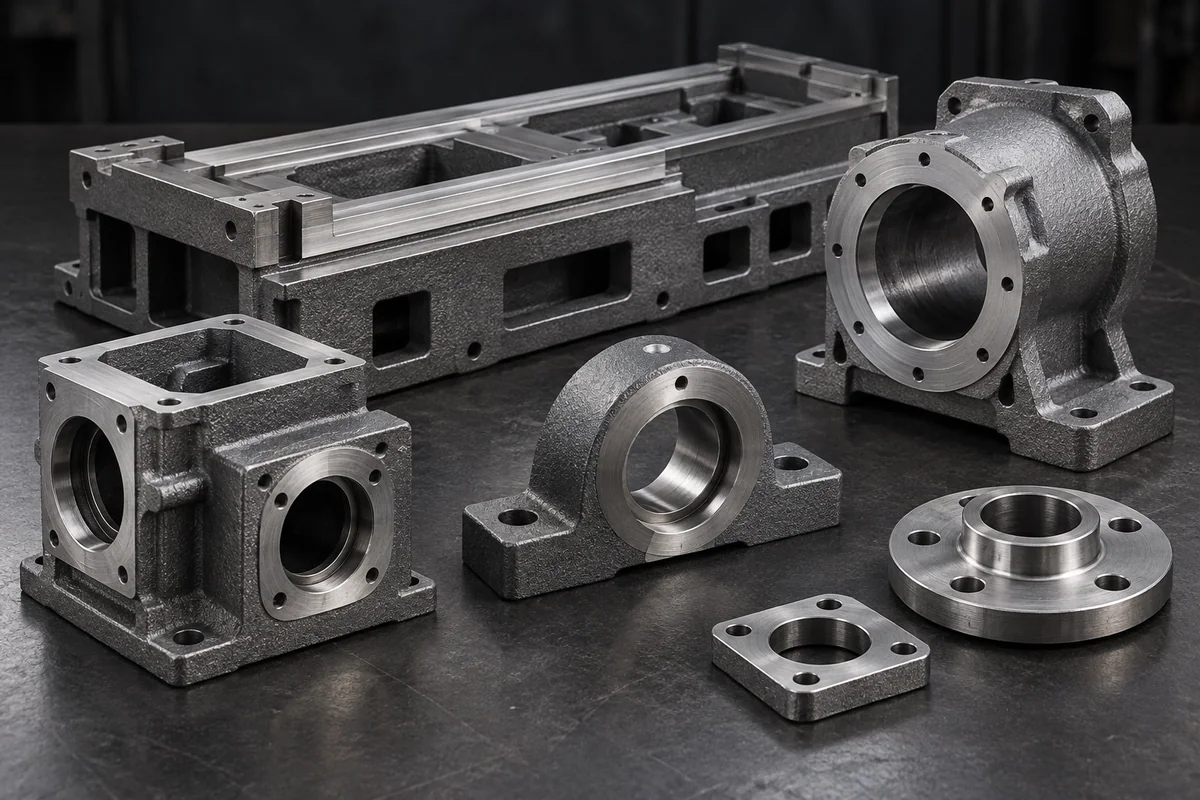
Cast iron for CNC-machined machine interfaces, housings and vibration-damping structures. Gray and ductile iron have different strength and ductility. Casting condition and available machining stock influence process planning.

Reference grades

Grades to consider for Cast Iron

CodeNotes
ASTM A48 Class 30Gray iron — machine housings and bases
ASTM A48 Class 40Gray iron — higher-strength class
ASTM A536 65-45-12Ductile iron — structural cast components

Typical uses

Typical uses for Cast Iron

Machine bases

For machine bases, specify gray versus ductile iron, machining stock on the casting and which faces are datums.

Pump and gearbox housings

For pump or gearbox housings, specify porosity acceptance, sealing faces and remaining wall after machining.

How we work

Materials, tolerances, equipment

Cast iron for CNC-machined machine interfaces, housings and vibration-damping structures. Gray and ductile iron have different strength and ductility. Casting condition and available machining stock influence process planning.

How should I select the grade?

Gray and ductile iron have different strength and ductility. Casting condition and available machining stock influence process planning. Material availability, stock size and certificate requirements are confirmed during quotation; a listed grade is not a stock guarantee.

What affects machining and inspection?

Review casting defects, datum selection, machining stock and sealing surfaces. Functional tolerances depend on part geometry, material condition, fixturing and measurement method, not only the material family.

What should I specify for finishing?

State the finish standard, thickness, color or texture, masking and functional surfaces. Consider coating build in fits and threads. Approve any material or finishing substitution in writing.

Material quotation checklist

Send the exact grade and condition, 2D drawing, STEP model, quantity, critical features, service environment and traceability requirements. Tecpreva can review machining suitability and proposed alternatives before production.

Bring a drawing

Discuss your Cast Iron part with us.

Send the CAD file, required grade, quantity and operating conditions. We will review material availability and machining feasibility before confirming a production route and quote.

Request a quote