
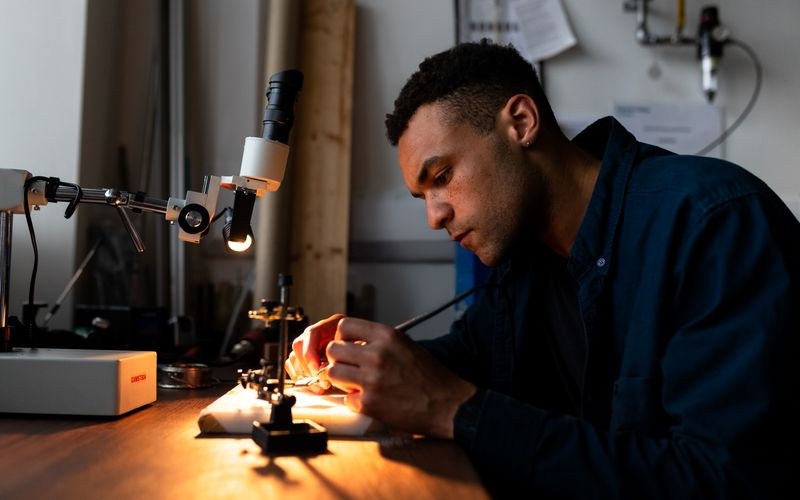
Wire EDM cutting a precision tool steel die

Capability

Wire EDM

Wire EDM · through-profile cutting · inspection review

Drawing-reviewed
Standard tolerance (mm)
Drawing-specified
Surface finish (Ra µm)
Material-specific
Max material hardness
Project-reviewed
Avg. prototype turnaround

Manufacturing path

What we control on this route, and how we prove it.

Below is the manufacturing path for this capability: the equipment we run it on, the in-process inspection we apply, and the evidence that ships with the lot. Compare it against your print — if a control is missing from your drawing, we will flag it in the DFM note.

Wire EDM uses an electrically charged wire to cut conductive material along a programmed profile. It is useful for through-slots, precision tooling profiles and hardened parts where mechanical cutting forces are undesirable.

What we make

Common parts made via wire edm

Progressive die punches after wire EDM

Punch & die sets

Review through-profile accuracy, corner radius, recast-layer limits and hardness state. Wire entry and slug handling should be shown on the drawing or process notes.

Hardened gear cutting tool after wire EDM

Hardened gear & spline tooling

Review tooth or spline profile, stock after heat treatment and how the profile will be measured. Hardened tooling often needs EDM after heat treatment rather than milling to size.

Tool steel prototype with sharp internal corners

Sharp-corner through profiles

Review whether the feature is a through-cut, the minimum internal radius and whether a recast layer is acceptable. Blind cavities are not a wire-EDM route.

How we work

Materials, tolerances, equipment

Wire EDM uses an electrically charged wire to cut conductive material along a programmed profile. It is useful for through-slots, precision tooling profiles and hardened parts where mechanical cutting forces are undesirable.

Typical parts and project fit

This process is considered for tool inserts, through-slots and intricate conductive profiles. Tecpreva reviews the drawing, material condition, quantity and functional requirements before confirming the production route.

Drawing and inspection checklist

Identify conductivity, wire entry, part thickness, corner radius and recast-layer requirements. Supply a revision-controlled 2D drawing, STEP model, finish specification and critical dimensions. Machine positioning accuracy alone does not define achievable part tolerance.

Can wire EDM machine plastics or blind cavities?

Standard wire EDM requires an electrically conductive workpiece and a wire path through the cut. Most plastics are unsuitable, and blind cavities generally require milling or sinker EDM instead.

From first article to repeat production

Agree the fixture and datum strategy, first-article checks, sampling plan and dimensional report scope before production. Record revisions and protect functional surfaces during finishing and packing.

Bring a drawing

Send your Wire EDM drawing for review.

Include geometry that drives this process, material grade, quantity and the inspection points that matter. Engineering sends an initial response within one business day and confirms the proposed route after drawing review.

Request a manufacturing review